
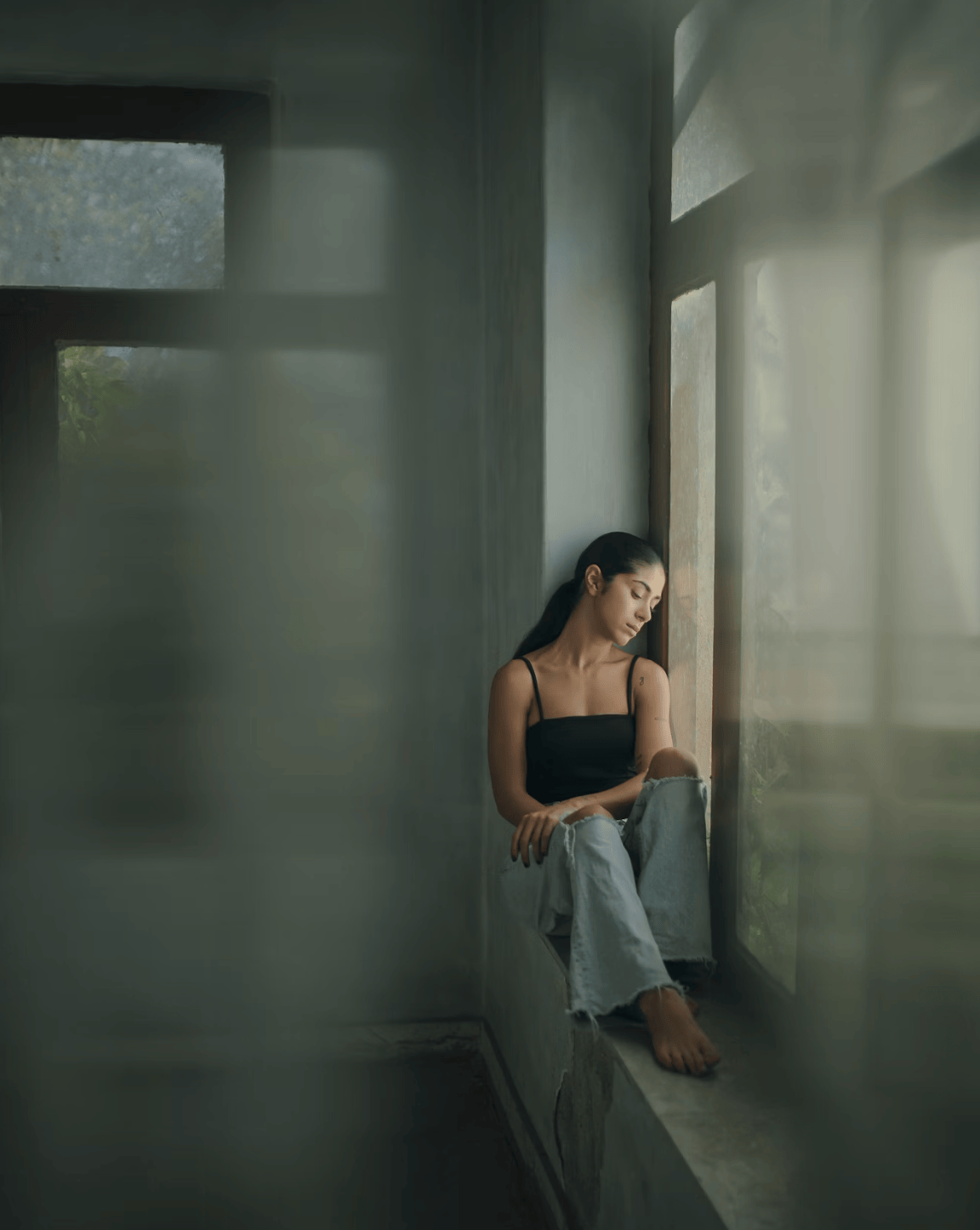
We shouldn’t have to carry it alone — but we often do.
Somewhere along the way, pain became part of being a woman. Period pain. Childbirth pain. The pain of hormones, cramps, and our bodies doing what they’re “meant” to do. We’ve been told to expect it, endure it, and — most of all — not make a fuss.
Pain has been so tightly woven into the story of womanhood that we sometimes stop recognising it as a signal that something might be wrong, and instead, treat it like background noise — just an inevitable side effect of existing in a female body.
So when women speak up about pain, it’s often met with disbelief or dismissal. “It’s normal.” “It’s stress.” “It’s just hormones.” We’ve normalised women’s suffering to the point where pain itself has become gendered.
The gender pain gap
There’s a name for this pattern, too: the Gender Pain Gap. It describes the way women’s pain is taken less seriously, treated less urgently, and investigated less thoroughly than men’s — because our healthcare systems weren’t designed with our bodies in mind.
The Gender Pain Gap isn’t just about under- or untreated pain. It’s also about the emotional labour of being disbelieved, the administrative load of self-diagnosis, and the silent endurance of knowing that if you don’t hold it together, no one else will.
This is the silent workload of women’s pain: the invisible effort of living in a body that’s been misunderstood, medicalised, and minimised for centuries. And quite frankly, it sucks.
Women’s pain: the invisible work that others don’t see
Pain isn’t just what happens in your body — it’s everything you do to manage it. You become your own data analyst, tracking every twinge, cramp, and flare-up like a one-woman clinical trial.
You spend late nights in the glow of your phone, scrolling through forums and asking Google: Is this endometriosis? Is this normal? You juggle appointments, chase referrals, wait on hold, and smile politely when doctors say, “Let’s wait and see.”
You hold it together at work, at home, in relationships — quietly recalibrating your life around pain. And it’s invisible, because women have been conditioned to make it look easy.
What the research tells us
When we look at women’s pain through the lens of epidemiology and clinical study, a consistent picture emerges: women experience more pain, more frequently, and face greater challenges in their care journey.
A fact sheet by the International Association for the Study of Pain (IASP) states that chronic pain affects between 20–40% of adults, and women “generally experience more pain across the lifespan when compared to men.”1
So, why do women experience more pain? It’s not that we’re weaker or making it up — we’re simply more prone to conditions that are painful: temporomandibular disorders, osteoarthritis, fibromyalgia, and many more..2
A 2022 review, Sex and Gender Differences in Pain, found that women are disproportionately affected by chronic pain, with around half of chronic pain conditions being more common in women — and only about 20% having a higher prevalence in men.3
Lucky us.
Is women’s pain tolerance higher than men’s?
If we experience more painful conditions, maybe we’re built for it — and should be able to tolerate the pain better, right? After all, birth, periods, cramps. We’re built for this.
Wrong.
The truth is messier, more surprising — and frankly, more interesting.
What the studies say
The bulk of research does not support the idea that women have a higher pain threshold (the point at which something becomes painful) or a greater tolerance (how long or how much pain one can endure).
Instead, experimental studies using heat, pressure, and cold-pressor tasks often find that women have a lower pain threshold and lower pain tolerance than men— though results can vary.4
These differences in pain sensitivity are thought to happen due to a mix of biological and social factors: hormones and the body’s natural pain regulators (like endorphins), as well as cultural expectations around how we express and cope with discomfort. While the exact causes aren’t fully understood, it’s likely that both body and environment play a part.
Why this matters — and what it doesn’t mean
Lower threshold and tolerance in women does not mean women are “weaker” or “less capable” — far from it.
Laboratory studies usually measure pain in seconds — dipping a hand into icy water, holding an ice block, pressing against heat — until the participant says “stop.” These cold-pressor and thermal tests are designed to quantify acute pain under controlled conditions: brief, predictable, and safely ended.
But women’s pain rarely fits that model. Endometriosis, pelvic pain, and chronic migraines are not flashes of discomfort; they’re endurance events. They last hours, days, sometimes years — woven into workdays, childcare, and commutes.
Research shows that in these short laboratory tests, men often last longer — reporting slightly higher tolerance for acute stimuli like cold or heat — but that tells us little about the lived experience of chronic, cyclical, or visceral pain.
Women may appear “more sensitive” to pain in the lab — but the bigger question is whether we’re being studied under the right conditions. In reality, many women are functioning through pain that would leave most people bedridden: sitting in meetings, doing school drop-offs, showing up because stopping isn’t an option.
Some of the ways women get short-changed on pain
Women don’t just experience more pain — we’re routinely given less help for it. From emergency rooms to GP consults, the evidence paints a clear (and infuriating) picture of systemic bias.
In hospitals, women wait longer for pain relief. One large emergency-department study found that women presenting with acute abdominal pain waited a median of 65 minutes for analgesia, compared to 49 minutes for men — and were up to 25% less likely to receive opioids, even when pain scores were identical.5
That pattern repeats across settings. Women are less likely to be prescribed pain medication at admission and discharge 6 and more likely to be given sedatives or antidepressants instead — a signal that their pain is often reframed as emotional distress rather than physical suffering.7
Even when women are in obvious pain, they’re less likely to be believed. Multiple studies show that physicians and even medical students consistently underestimate women’s pain and are more inclined to attribute it to psychological causes.8
And when pain originates in conditions that primarily affect women — like endometriosis — the delays are staggering. Globally, an endometriosis diagnosis takes seven to eight years on average, leaving millions of women to manage debilitating pain with little to no clinical validation or support.9
The result? Women’s pain is not only more common, but also more questioned, more mismanaged, and more misinterpreted as something we should simply endure.
The emotional load of silencing women’s pain
Women don’t just feel pain; we manage it, hide it, and work around it. That’s not resilience — it’s expectation.
In workplaces, pain becomes a silent performance. You smile through cramps in meetings, apologise for needing a day off because “it’s just period pain.”
Research shows women may be twice as likely as men to push through physical discomfort at work, often fearing judgment or career penalties for “female issues.”10 Presenteeism — being there, but unwell or in pain — is the invisible tax women pay to be taken seriously.
At home, the load doubles. Pain doesn’t clock off at 5 p.m. You’re still the one managing dinner, bedtime, the calendar, the emotional needs of everyone else — while your own body is negotiating its limits.
Research on “invisible labour” shows that women consistently carry more of the household’s mental and emotional work, regardless of employment status or health.11 Add pain to that, and even rest becomes something you have to earn.
This is the emotional load of pain: the unseen effort of holding everything together — while your body is asking for care. It’s the constant background hum of self-management that rarely gets named, and almost never gets help.
Female pain management: It’s Not biology, It’s bias
At Hazel, we affirm and support trans women and their right to compassionate, evidence-based healthcare. Trans women are women — and like all women, they (unfortunately) often face the same systemic bias when it comes to how their pain is seen, believed, and treated.
Emerging research suggests that bias in pain treatment has less to do with biology and more to do with perception. When a person is seen as a woman — whether cis or trans — their pain is more likely to be underestimated, psychologised, or delayed in treatment.
For trans women, this bias can compound: they not only encounter the same patterns of dismissal familiar to cis women, but also face the added weight of transphobia and medical mistrust. Qualitative studies describe trans women reporting their pain being reframed as “hormonal side effects” rather than investigated, and surveys show that nearly one in three have been refused or disrespected in healthcare settings.12
Meanwhile, hormone therapy itself can influence pain perception — oestrogen, for example, heightens pain sensitivity through changes in the nervous system — which only complicates the picture further.13
Together, these findings reveal something striking: once you’re perceived as a woman, your pain is taken less seriously. It’s not about anatomy — it’s about bias.
The Bottom line
The silent workload of women’s pain isn’t just the pain itself — it’s everything that comes with it. It’s the waiting, the researching, the second-guessing, the holding it together while no one sees what it costs. It’s carrying a body that hurts and still showing up anyway.
For too long, women have been expected to endure pain quietly — to normalise it, manage it, and move on. But this hidden labour deserves recognition, not resilience. At Hazel, we see the weight women carry when their pain is dismissed or delayed. And we’re here to lighten it — by listening, investigating, and helping women find the care they’ve always deserved.

- International Association for the Study of Pain. Gender Differences in Chronic Pain Conditions. 2024.
- Ibid.
- Osborne NR, Davis KD. Sex and gender differences in pain. Int Rev Neurobiol. 2022;164:277-307. doi:10.1016/bs.irn.2022.06.013
- Bartley EJ, Fillingim RB. Sex differences in pain: a brief review of clinical and experimental findings. Br J Anaesth. 2013;111(1):52-58. doi:10.1093/bja/aet127
- Chen EH, Shofer FS, Dean AJ, et al. Gender disparity in analgesic treatment of emergency department patients with acute abdominal pain. Acad Emerg Med. 2008;15(5):414-418. doi:10.1111/j.1553-2712.2008.00100.x
- Yang N, Fang MC, Rambachan A. Sex Disparities in Opioid Prescription and Administration on a Hospital Medicine Service. J Gen Intern Med. 2024;39(14):2679-2688. doi:10.1007/s11606-024-08814-7
- Stieger A, Asadauskas A, Luedi MM, Andereggen L. Women's Pain Management Across the Lifespan-A Narrative Review of Hormonal, Physiological, and Psychosocial Perspectives. J Clin Med. 2025;14(10):3427. Published 2025 May 14. doi:10.3390/jcm14103427.
- Samulowitz A, Gremyr I, Eriksson E, Hensing G. "Brave Men" and "Emotional Women": A Theory-Guided Literature Review on Gender Bias in Health Care and Gendered Norms towards Patients with Chronic Pain. Pain Res Manag. 2018;2018:6358624. Published 2018 Feb 25. doi:10.1155/2018/6358624
- Ballard K, Lowton K, Wright J. What's the delay? A qualitative study of women's experiences of reaching a diagnosis of endometriosis. Fertil Steril. 2006;86(5):1296-1301. doi:10.1016/j.fertnstert.2006.04.054
- Gustafsson Sendén M, Schenck-Gustafsson K, Fridner A. Gender differences in Reasons for Sickness Presenteeism - a study among GPs in a Swedish health care organization. Ann Occup Environ Med. 2016;28:50. Published 2016 Sep 20. doi:10.1186/s40557-016-0136-x
- Aviv E, Waizman Y, Kim E, Liu J, Rodsky E, Saxbe D. Cognitive household labor: gender disparities and consequences for maternal mental health and wellbeing. Arch Womens Ment Health. 2025;28(1):5-14. doi:10.1007/s00737-024-01490-w.
- Poteat T, German D, Kerrigan D. Managing uncertainty: a grounded theory of stigma in transgender health care encounters. Soc Sci Med. 2013;84:22-29. doi:10.1016/j.socscimed.2013.02.019
- Stieger A, Asadauskas A, Luedi MM, Andereggen L. Women's Pain Management Across the Lifespan-A Narrative Review of Hormonal, Physiological, and Psychosocial Perspectives. J Clin Med. 2025;14(10):3427. Published 2025 May 14. doi:10.3390/jcm14103427
.jpg)
.avif)